Free Guide
A practical guide to alternative investing
What serious investors should understand before committing capital
Alternative investments can offer diversification and attractive returns, but they also introduce complexity, illiquidity, and risks that aren’t always obvious.
This free guide gives you a clear, investor-focused framework for understanding alternative investments, so you can evaluate opportunities with confidence.
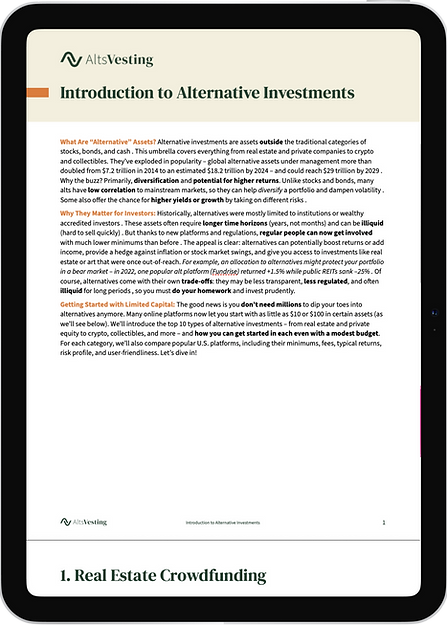
Why this guide exists
Most content about alternative investing falls into one of two categories:
-
High-level explanations that stop short of real decision-making
-
Platform marketing designed to emphasize upside and minimize risk
Neither helps when you’re deciding whether to invest real money.
This guide was created to give investors context, clarity, and a repeatable way to think about alternative investments.
What’s inside this guide
This isn’t a surface-level “intro.” It’s a practical resource you can return to whenever you’re evaluating an alternative investment.
Inside, you’ll learn:
-
How major alternative asset classes actually work
-
The most common risks investors underestimate
-
How fees, incentives, and structures affect outcomes
-
Why liquidity and lock-ups matter more than most investors expect
-
The questions you should ask before committing capital
Everything is written in plain language, but with the depth serious investors need.
Who this guide is for
This guide is designed for investors who:
-
Are exploring alternatives beyond public markets
-
Want to understand risks before chasing returns
-
Prefer independent analysis over promotional content
-
Plan to invest real capital—not just browse ideas
No prior experience with alternative investments is required. The goal is simply to help you approach them with better context and clearer expectations.
How investors use this guide
Investors use this guide to:
-
Frame opportunities before diving into platform details
-
Ask better questions when evaluating investments
-
Spot red flags early
-
Decide when to dig deeper—and when to walk away
It’s built to support real-world decision-making, not just education.